
A live wedding band typically runs $4,500 on average in the United States, while a solo ceremony musician or duo often costs far less, and a wedding DJ averages $1,800. Costs scale with band size, hours booked, travel distance and equipment needs.
TL;DR:
- A full wedding band in the U.S. averages $4,500, but costs vary based on band size, hours, travel, and equipment needs, while a DJ costs around $1,800.
- Ceremony music typically costs $500 for a soloist or duo, but larger ensembles like quartets or full bands significantly increase the price, especially in the UK.
- Custom arrangements, extended hours, sound equipment, travel, and booking through agencies can add substantially to the base price, so itemized quotes are essential for comparison.
- Splitting music segments—ceremony, cocktail hour, reception—and choosing local or off-peak vendors can reduce overall costs without compromising quality.
- Bespoke classical performances, offered by services like Musica Luxe, are tailored to the couple's specific musical preferences and ensemble size, with quotes based on detailed consultations.
Table of Contents
- Average costs and ranges for US and UK weddings
- Cost by musician type and band size: what each tier typically includes
- What drives your quote: hours, songs, gear, and travel
- Budgeting ceremony, cocktail hour, and reception separately
- Sample budgets and ways to spend less without cutting corners
- Contracts, deposits, and the day-of checklist
- When bespoke classical music makes sense
- Three questions to ask yourself before you book
- How to request a bespoke quote from Musica Luxe
- Sources
- FAQ
Average costs and ranges for US and UK weddings
The numbers shift depending on which market you're in and what kind of act you're hiring, but a few anchors hold steady. In the United States, The Knot's Real Weddings Study puts the average live wedding band at $4,500 and the average wedding DJ at $1,800, though both figures move with region and guest count. Larger guest lists and premium venues tend to push music spend higher, and couples are increasingly willing to pay more for a curated live experience when music sits at the center of their day.

Ceremony music runs on a separate scale. WeddingWire reports an average U.S. ceremony musician cost of around $500, though this varies by city: examples cited include roughly $500 in Atlanta and $335 in Portland. A string quartet or larger ensemble costs considerably more than a lone soloist.
In the UK, FixTheMusic's 2026 pricing guide uses a rule-of-thumb of about £405 to £475 per musician, which puts a common four-piece wedding band around £1,620 to £1,900 in total. Separately, the GigXchange Index reports a UK median artist take-home of about £990 for a 3 to 4 piece wedding band, a figure that reflects what musicians actually keep.
| Act type | Typical use | Approximate range | Notes |
|---|---|---|---|
| Solo musician | Ceremony or cocktail hour | Around $500 (US average) | WeddingWire reports regional swings from about $335 to $500 |
| Duo | Ceremony or cocktail hour | Higher than solo, scales with hours | Priced per musician plus setup time |
| Trio | Ceremony, cocktail hour or small reception | Scales with per-musician rate | Common blend of strings or mixed instruments |
| String quartet | Ceremony, cocktail hour | Above solo/duo rates | Frequently priced per musician in the UK |
| 3 to 4 piece band | Reception | UK median about £990 (GigXchange); UK four-piece around £1,620 to £1,900 (FixTheMusic) | Add 25 to 50% for agency-booked UK acts |
| 5+ piece band | Full reception | US average $4,500 (The Knot) | Larger horn sections or extra vocalists raise the total |
Regional variance is real enough that a quote from your own city or county matters more than any national average.
Cost by musician type and band size: what each tier typically includes
Matching the ensemble to the moment matters as much as the headline price. A soloist, usually a violinist, guitarist or pianist, covers a prelude, processional and recessional and works well for intimate ceremonies or cocktail hours where background music is the goal. A duo adds harmonic depth, often a second string or a voice paired with piano, and suits slightly larger ceremony spaces.
A trio or string quartet brings a fuller classical sound and is a common choice for couples who want the ceremony itself to feel like a performance rather than a backdrop. A small band, typically three to four pieces, is the standard reception act in the UK, sitting near that £990 median from GigXchange. A full show band, five or more musicians often including horns or multiple vocalists, delivers the fuller reception sound that pushes the U.S. average toward $4,500.
- Soloist: prelude, processional, recessional; lowest per-musician cost.
- Duo: adds a second instrument or voice for fuller ceremony sound.
- Trio or string quartet: classical texture suited to formal ceremonies.
- Small band (3 to 4 piece): standard UK reception act, priced per musician.
- Full band (5+ piece): horns, extra vocalists, the fullest reception sound.
Pricing generally scales close to linearly with headcount, since each added musician carries their own fee, though some acts offer a modest per-head discount at higher counts. A common hybrid approach pairs a ceremony soloist or quartet with a separate reception band, which lets couples put polish where guests notice it most (the ceremony) while spending the bulk of the music budget on the reception, where the act performs longest.
What drives your quote: hours, songs, gear, and travel
Five levers move a wedding music quote more than anything else, and understanding them turns a vague number into a negotiable one.
- Hours booked: most acts quote a base package (often three to four hours) and charge an hourly add-on for anything beyond it; overtime rates typically run higher than the base hourly rate.
- Custom arrangements: turning a favorite pop song into a string quartet piece takes transcription and rehearsal time, and Paperlust cites common per-song fees of roughly $20 to $50 per musician for a full custom arrangement.
- Equipment and sound: a PA system, microphones and a dedicated sound engineer add cost, particularly for outdoor ceremonies or reception spaces without house sound.
- Travel and accommodation: mileage, tolls and, for destination weddings, hotel nights are commonly billed on top of the performance fee.
Sample vendor pricing sheets illustrate how these add up in practice. A WeddingWire vendor pricing example shows a solo musician starting around $225 for the first hour, a duo around $450, and a string quartet around $900 for the first hour, before arrangement fees or travel are added.
Adding cocktail hour to a ceremony booking generally costs an incremental fee rather than a full second engagement. Paperlust notes this often runs $150 to $400 per musician per extra hour, which is usually cheaper than booking a second act.

Pro Tip: Ask every quote to itemize the base performance fee separately from travel, equipment and arrangement fees. It's the fastest way to compare two vendors fairly and to spot where you can trim without cutting the performance itself.
Budgeting ceremony, cocktail hour, and reception separately
Splitting your music budget by segment, rather than treating "wedding music" as one line item, makes trade-offs clearer. Ceremony music is usually the smallest piece: a soloist averages around $500 in the U.S., per WeddingWire, while a quartet costs more but still typically less than a full reception band.
Cocktail hour is where couples often overspend without realizing it. If your ceremony musicians can stay on for cocktail hour, the incremental cost is usually the $150 to $400 per musician per extra hour cited by Paperlust, rather than a fresh booking fee. Reception music carries the bulk of the budget, since it runs the longest and typically involves the largest ensemble, with U.S. averages near $4,500 for a full band.
- Ceremony only: soloist or duo, lowest cost, covers prelude through recessional.
- Ceremony plus cocktail hour: same musicians extended, incremental hourly fee rather than a new booking.
- Reception: largest ensemble and longest set, the majority of the total music budget.
Prerecorded tracks or a DJ can be a reasonable substitute for cocktail hour or even the reception if live sound isn't a priority for that segment, and doing so frees up budget for a stronger live act where it matters most, typically the ceremony or the first dance set. The trade-off is atmosphere: recorded music rarely carries the same presence as musicians in the room, but it costs a fraction as much and removes a logistics variable.
Sample budgets and ways to spend less without cutting corners
A rough 10% guideline for music, split across ceremony and reception, gives most couples a workable starting point against their overall wedding budget, with the understanding that The Knot's broader wedding cost data shows music competing for budget share against venue, catering and photography.
For a modest wedding, a soloist for the ceremony (around $500, per WeddingWire) paired with a DJ for the reception (averaging $1,800, per The Knot) keeps total music spend well under $3,000. A mid-range wedding might add a duo or trio for the ceremony and a small 3 to 4 piece band for the reception, landing closer to the UK median of £990 for the band alone plus ceremony fees. A high-end wedding with a full 5+ piece reception band sits near or above the $4,500 U.S. average, before travel or custom arrangements are added.
- Hire a smaller ensemble for the ceremony and save the bigger act for the reception only.
- Book local musicians to avoid travel and accommodation fees.
- Choose an off-peak wedding date or day, when musicians often have more availability and flexibility on price.
- Limit custom arrangements to one or two meaningful songs instead of a full custom set list.
- Let one ensemble cover both ceremony and cocktail hour instead of booking two separate acts.
Pro Tip: If you love a band's reception sound but their ceremony rate feels steep, ask whether a smaller subset of the same musicians, say two players instead of the full five, can cover the ceremony at a lower per-musician cost.
Contracts, deposits, and the day-of checklist
A clear contract protects both sides and prevents most day-of surprises. Deposits commonly run as a percentage of the total fee, due at booking, with the balance due closer to the event date; cancellation policies vary by vendor, so ask specifically what happens if you need to reschedule.
- Confirm the deposit and cancellation terms in writing, including any date-change fees.
- Request a rider covering musician meals, water, parking and power access, since venues without dedicated outlets can add setup complications.
- Lock in setup and soundcheck windows as part of the contract, not a verbal agreement, especially at venues with tight turnaround times.
- Confirm overtime rates in advance so an extended reception doesn't bring a surprise invoice.
- Clarify gratuity expectations, since some acts build it into the quote and others treat it as optional.
A detailed rider reduces day-of risk considerably, since musicians typically include setup and standard soundcheck time in their base fee but may charge extra for unusually early arrival windows or complicated venue logistics. Booking your act 9 to 12 months ahead of a peak season date (typically late spring through early fall in most markets) gives you the best shot at availability and negotiating room.
When bespoke classical music makes sense
Off-the-shelf bands and DJs cover most weddings well, but some couples want a ceremony or reception built around a specific musical vision rather than a standard set list. That's where a bespoke classical service like Musica Luxe differs from a typical band booking: instead of choosing from a fixed roster, couples consult directly on the ensemble size, repertoire and arrangement before a single quote is issued.
Musica Luxe positions itself around direct consultation and musicians who are classically trained with concert experience, ensuring a performance tailored to the client's vision rather than focusing solely on stage presence. Every engagement is custom quoted, factoring in ensemble size, travel, and any custom arrangements requested, reflecting the typical factors that influence wedding music quotes, applied to a tailored classical performance.
To get an accurate bespoke quote, couples typically need to share the event date, venue, the segments they want covered (ceremony, cocktail hour, reception or a combination), and any specific pieces or genres they'd like arranged. Reviewing sample ensemble setups and performances beforehand helps couples describe what they're picturing, which speeds up the consultation and sharpens the eventual quote.
Three questions to ask yourself before you book
Before setting a number, ask yourself three things. First: how big is your venue and guest list? A backyard ceremony for 40 guests doesn't need the same ensemble as a 200-person ballroom reception, and matching scale to space saves money without anyone noticing a difference.
Second: how central is live music to your vision for the day? If it's a top priority, lean toward the higher end of your range and protect that line item first when trimming elsewhere. If it's atmosphere rather than centerpiece, a smaller ensemble or a DJ for part of the day is a reasonable trade.
Third: how much flexibility does your date have? Shifting to an off-peak month or a Friday or Sunday often opens up better musicians at better rates, simply because demand is lower. Answer these honestly and the right spend tier tends to reveal itself.
— William
How to request a bespoke quote from Musica Luxe
If a standard band or DJ package doesn't match the atmosphere you're picturing, Musica Luxe offers a different route: a fully bespoke classical performance built around a consultation, rather than a pre-packaged set list. Ensembles range from a single soloist to a full chamber orchestra, and every quote reflects the specific ensemble, arrangements and travel your event requires.
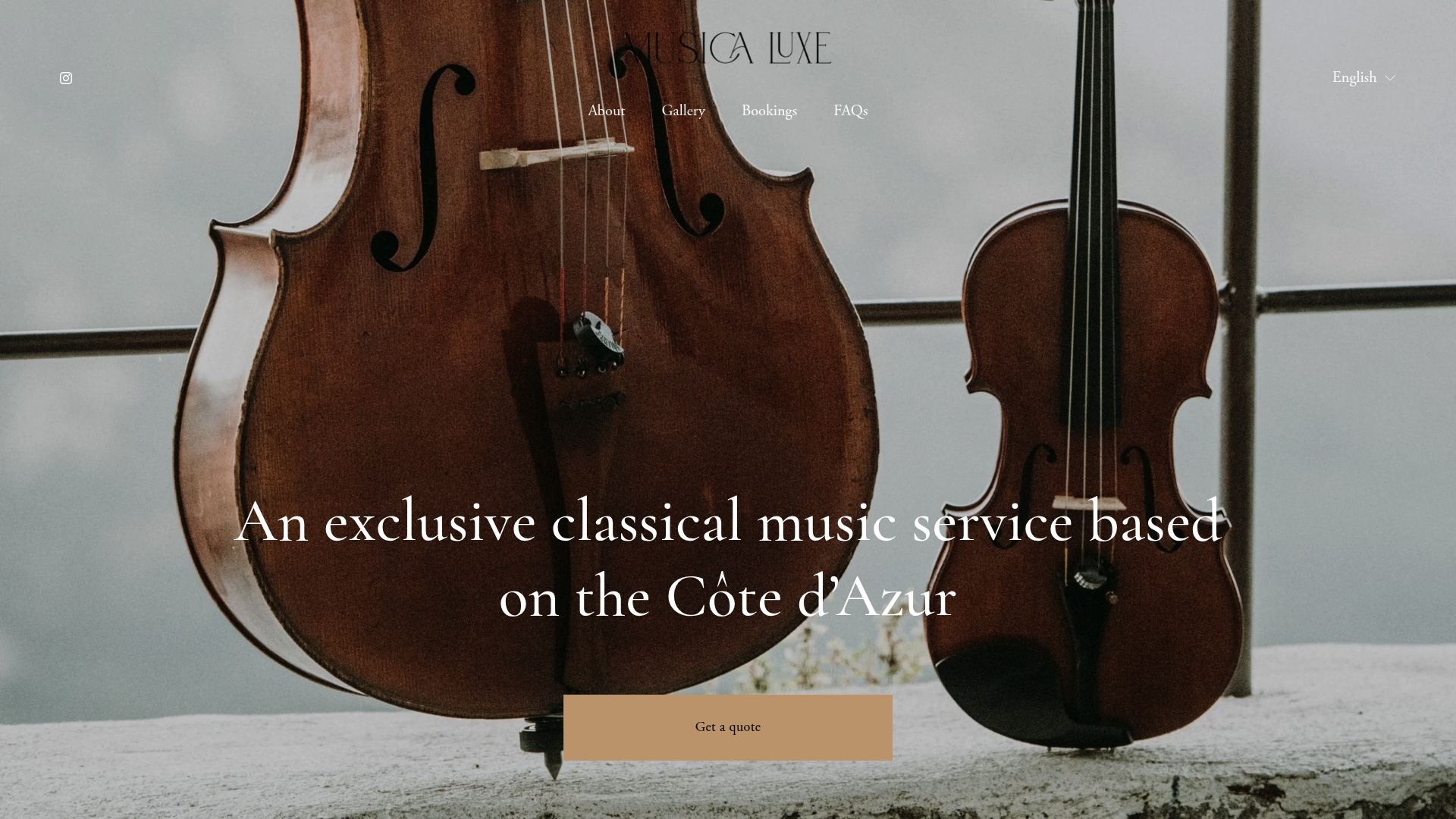
To request an accurate quote, share the following when you reach out:
- Your event date and venue location.
- Which segments you want covered, such as ceremony, cocktail hour or reception.
- Guest count and general setting (indoor, outdoor, size of space).
- Any specific pieces, composers or genres you'd like arranged for the ensemble.
From there, a tailored proposal based on your details is provided. Start the conversation through the booking and contact page or browse the full service overview to learn about the consultation process.
Sources
FAQ
How much does a live musician cost for a wedding?
A solo ceremony musician in the U.S. averages around $500, while a full live band for the reception averages $4,500. Costs rise with ensemble size, hours booked and any travel or custom arrangement fees.
What is the 50/20/30 rule for weddings?
This is a general budget-splitting concept some planners use to divide spending across categories like venue, attire and entertainment, but there's no single official version of the rule. Rather than following a fixed percentage split, most couples do better allocating around 10% of their total budget to music and adjusting based on how central live performance is to their day.
How much is a DJ for 4 hours at a wedding?
A wedding DJ in the U.S. averages $1,800, which typically covers a standard reception length of around four hours, though exact package hours vary by vendor. Extending beyond the booked hours usually incurs an additional overtime rate.
Is a DJ or band cheaper for a wedding?
A DJ is generally the cheaper option: the U.S. average for a DJ is $1,800 compared with $4,500 for a live band. The gap reflects the number of performers involved, since a band's fee is split across multiple musicians while a DJ operates as a single act.