
The best product launch music is upbeat, polished, and written in a major key with a clear build toward a payoff moment, paired with a license that explicitly covers commercial and promotional use. Grab a track with a confirmed sync or royalty-free commercial license, check for available stems or short edits, and match the tempo to the footage before you lock anything in. Research on tempo, timbre, and pitch backs this up, and the sections below cover selection, licensing, and syncing in order.
TL;DR:
- YouTube Creator Music licenses are channel specific, and editorial licenses exclude promotion; verify commercial, geographic, term, and reuse rights before publishing or reposting.
- Match tempo to each section: use roughly 60 to 90 BPM for teasers, a steady moderate groove for demos, and above 110 BPM for reveals.
- Audition two or three tracks against a rough cut, mark visual beats, and request stems or alternate edits instead of stretching audio and distorting pitch.
- For digital cuts, pair an original 8 to 16 bar motif with licensed tracks in matching keys and tempos; bespoke work is quoted per event.
- Live musicians can extend arrivals or cue reveals on the spot, but venue acoustics, space, and event timing require advance coordination.
Table of Contents
- What makes launch music effective: tempo, mode, and arrangement
- Where to find royalty-free launch tracks and how licenses differ
- Selection checklist and presets you can copy into a brief
- How to sync and edit music to your launch video
- Tailoring classical arrangements to match brand identity
- Integrating live performance into a launch event
- Cost considerations for bespoke classical music services
- Timeline for booking classical music ahead of your launch
- When stock tracks win and when bespoke music is worth it
- Musica Luxe: a signature soundtrack for premium launches
- FAQ
- Sources
What makes launch music effective: tempo, mode, and arrangement
Launch videos work in stages, and the music should match each one. A teaser running at a slower tempo around 60 to 90 BPM feels patient and builds anticipation; a demo section with moderately paced tempo keeps momentum without rushing the explanation; a reveal or hype moment at a faster tempo above 110 BPM delivers the payoff energy viewers expect at the climax.
Mode matters as much as speed. Major keys read as confident and optimistic, which is why most commercial launch tracks sit in major rather than minor, reserving minor or modal color for moodier teaser beats that need mystery instead of excitement.
Instrumentation sets the polish level. A clean synth pad layered with crisp pop drums feels current and digital-native, while modern orchestral hits (a snare crack under a string swell, a brass stab on the cut) signal scale and importance without sounding dated. The cleaner the mix, the more "commercial-ready" a track feels next to a voiceover.
- Teaser sections favor slower tempos and sparser arrangements to build curiosity. Demo sections need a steady, unobtrusive groove that supports narration, while reveal or hype sections call for a faster tempo and fuller arrangement to deliver energy.
Research on tempo and mode shows that faster tempo increases perceived affect and attitude toward ads when listeners' attention is drawn to the music, which is exactly what happens in a product reveal moment built around a musical swell.
Where to find royalty-free launch tracks and how licenses differ
Four practical sourcing routes cover most launch projects. Free libraries work for quick social cuts with low stakes, but track quality and license clarity vary widely. Subscription libraries (monthly or annual access to a large catalog) suit teams publishing launch content regularly and want predictable costs. Single-track stock purchases make sense for a one-off hero video where you want the exact right track and don't need ongoing access. Bespoke commissioning, covered later in this piece, fits premium launches that want a signature sound no competitor can also license.
License terms are where most mistakes happen. A sync license covers pairing music with a specific video; a perpetual royalty-free license lets you reuse a track across multiple projects without renewing fees; editorial licenses explicitly exclude commercial or promotional use, which rules them out for launch content; and single-use versus multi-use terms determine whether you can repurpose the same track across a teaser, a demo, and a paid ad.
Platform rules add another layer. YouTube's Creator Music guidance requires either an upfront license purchase or enrollment in revenue sharing, and these licenses are channel-specific, meaning a track cleared for one channel doesn't automatically transfer if you repost the same video elsewhere. Short clips under 30 seconds in long-form content may qualify for revenue sharing instead of a paid license, but the rules shift depending on how the track is used.
Skipping this step carries real risk. A recent settlement between DSW and Sony Music over unlicensed music in social ads shows that using a major-label recording without proper clearance can end in costly litigation, not just a takedown notice.
Before downloading anything, confirm:
- Permitted uses (commercial, advertising, social, broadcast).
- Geographic and term limits on the license.
- Whether stems, alternate edits, or trimmed versions are included.
Selection checklist and presets you can copy into a brief
A simple five-step process keeps selection fast and consistent across a team. First, define the mood in a word or two (confident, playful, cinematic). Second, pick the BPM range that matches the video section. Third, choose instrumentation that fits your brand's existing sound (synth-driven versus orchestral-leaning). Fourth, confirm the license covers commercial and promotional use before you build around the track. Fifth, request an edit or trim if the stock version doesn't match your exact runtime.
Three presets cover most launch formats:
- Teaser preset: slower tempo in a minor-tinged or ambiguous mode with sparse piano or pad and a filtered build, with a hook and swell timed for early moments.
- Demo preset: moderate tempo in a major key, featuring clean pop drums and light synth bass, maintaining a steady groove to support narration.
- Hype/reveal preset: faster tempo in a major key, with a fuller arrangement including orchestral hits layered over electronic drums, with hooks and builds timed to key moments.
When requesting stems, ask for separated drums, bass, melody, and pad or orchestral layers at minimum, delivered as WAV files so you can remix levels without quality loss. Most libraries that offer stems will also supply a shortened "edit" version cut to common runtimes like :15, :30, or :60.
Pro Tip: Leave 3 to 6 decibels of headroom in the music bed wherever voiceover or sound effects will sit, so the mix stays clear instead of fighting for space.

How to sync and edit music to your launch video
Start by auditioning two or three tracks against a rough cut rather than picking blind, since a track that sounds great alone can clash with your pacing. Mark the visual beats first, meaning the exact frames where a cut, logo reveal, or product shot lands, then find or request a track whose tempo maps naturally to those points.
- Audition shortlisted tracks against your rough cut before locking one in.
- Mark key visual moments (cuts, reveals, callouts) as timeline markers.
- Map the track's tempo grid to your edit using your NLE's beat or tempo markers.
- Cut to the hit points so visual changes land on musical accents, not just nearby.
- Drop in stems under voiceover and duck the music bed where narration needs clarity.
- Finalize loudness to the target platform before export.
Most editing software (Adobe Premiere, DaVinci Resolve, Final Cut) supports beat markers or tempo mapping, which makes snapping cuts to musical hits far easier than eyeballing waveforms. If the stock edit runs long or short for your final cut, ask the licensor for a radio edit or extended version rather than stretching audio and distorting pitch.
Before export, confirm file format requirements for your target platform, check that loudness sits within the platform's target range, and keep the license documentation and track metadata on file in case a platform's content ID system flags the audio.
Pro Tip: Keep a saved project template with your preferred loudness target and marker colors, so every launch video starts the sync process from the same baseline.
Tailoring classical arrangements to match brand identity
A product launch built around classical instrumentation reads as prestige rather than hype, which suits brands positioning themselves at the premium end of their category. The arrangement choice should echo the product itself: a string quartet feels precise and intimate, suited to a smaller, detail-oriented reveal, while a chamber orchestra carries more weight for a flagship launch meant to feel like an event.
Tempo and mode logic carries over from stock tracks. A confident major-key arrangement with a rising string line toward the reveal creates the same anticipation curve as a synth-driven hype track, just rendered in a different sonic language. Brass accents can stand in for the "orchestral hit" moment common in commercial production music, landing exactly on a product unveiling or a logo animation.
The advantage of a custom arrangement over a licensed track is specificity. A motif can borrow from a brand's existing sonic identity (a jingle, a tagline rhythm, even a color palette translated into instrumentation choices) and get reworked by trained musicians into something that feels bespoke rather than borrowed from a catalog. That kind of signature motif, built once and arranged for different ensemble sizes, can then anchor every teaser, demo, and event video tied to the same launch.
Integrating live performance into a launch event
A live ensemble changes the pacing of an in-person launch event in ways recorded music can't. Musicians can read the room, extend a passage while guests are still arriving, or cut straight to a reveal moment the instant a product cover comes off, which a fixed audio track cannot do.

Logistics come down to three decisions: where the ensemble sits relative to the reveal area, how much space the setting allows for a soloist versus a larger group, and what the venue's acoustics demand (a glass-walled gallery behaves very differently from a hotel ballroom). Timing the performance around the event's actual flow, rather than a generic script, keeps the music from feeling like background filler.
A workable sequence runs: ambient solo or duo performance during arrivals, a shift to a fuller ensemble sound as guests take their seats, a built musical cue timed to the actual unveiling, and a return to lighter background music once the formal moment has passed. Coordinating this requires a short briefing with the musicians beforehand covering the exact run of show, since a live reveal cue needs a cue point just as precisely as a recorded video edit does.
Cost considerations for bespoke classical music services
Pricing for bespoke classical music at a product launch depends on a handful of variables: ensemble size, performance length, whether a custom arrangement needs to be composed from scratch, and whether recorded stems or edits are needed alongside the live performance. A soloist booked for a short reception will cost less than a chamber orchestra commissioned to perform an original arrangement across a full event.
Custom arrangement work typically carries its own fee separate from the performance itself, since arranging a motif for multiple ensemble configurations (solo, quartet, full chamber group) takes dedicated composition time before any rehearsal happens. Recorded delivery, meaning stems and edited cuts for use in launch videos after the event, adds another layer of scope beyond the live booking.
Because every launch has different staging, timing, and musical ambitions, bespoke classical services are typically quoted per event rather than sold at a fixed rate. We quote Musica Luxe services individually once we understand the ensemble size, arrangement needs, and whether recorded deliverables are part of the brief.
Timeline for booking classical music ahead of your launch
Booking early matters more for bespoke classical services than for licensing a stock track, since availability for skilled musicians and the time needed to compose or adapt an arrangement both run on their own calendars. A soloist or small ensemble for a straightforward performance can sometimes be confirmed with a few weeks' notice, but a custom-composed motif arranged for multiple ensemble sizes needs significantly more lead time.
A practical sequence looks like this: confirm the event date and venue first, then reach out for a consultation on repertoire and arrangement scope, follow with a period for composing or adapting the music if a custom motif is involved, and finish with rehearsal time before the event itself. Recorded deliverables, if needed for launch videos, typically get scheduled around the same recording session as rehearsal to avoid adding a separate booking.
Launches tied to a fixed date, such as a retail release or a press event, benefit from starting this conversation as early as the venue and catering are locked, rather than treating music as a final detail.
When stock tracks win and when bespoke music is worth it
Stock music wins on speed and repeatability. For most digital launch content, a well-licensed commercial track gets a video out the door fast, at low cost, with no scheduling dependency on musicians or venues.
Bespoke music wins on distinctiveness. A commissioned motif, especially one performed live at a premium launch event, becomes a brand signature that no competitor can also license, and it opens the door to a live performance moment a stock track never offers.
The practical middle path: commission a short motif, 8 to 16 bars, then license production tracks in a matching key and tempo for everyday digital cuts. The motif anchors brand recognition; the stock licensing covers volume.
— William
Musica Luxe: a signature soundtrack for premium launches
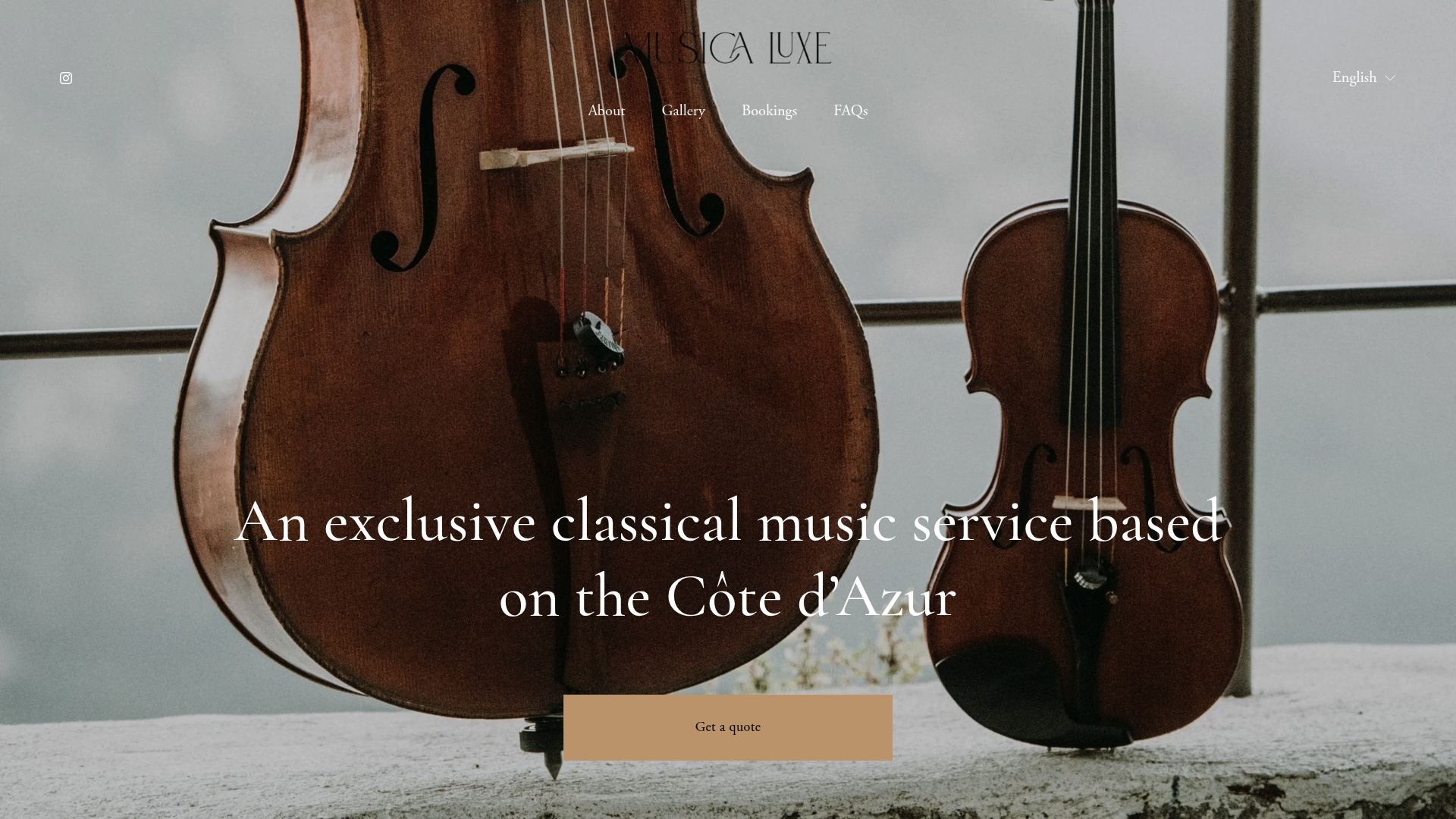
When a launch deserves more than a catalog track, we build a signature motif around your product and brand instead. The process starts with a consultation about the product, the event, and the desired mood, then moves to arrangement, recording, and delivery of stems and edits sized to fit teaser, demo, and reveal cuts.
What this looks like in practice:
- A short original motif arranged for anything from a solo instrument to a chamber orchestra.
- Recorded stems and trimmed edits delivered to match your video timings, not a generic stock length.
- Consultation to ensure the arrangement reflects the product’s character rather than relying on generic mood tags.
- Musicians are selected for their classical training and concert experience rather than appearance.
If a stock track has carried you this far and you're ready for something only your launch will ever use, see what we offer at Musica Luxe or browse examples of past work to hear what a bespoke arrangement sounds like before you book a consultation.
FAQ
What are some good songs for product reels?
Short, upbeat instrumental tracks with a clear hook in the first few seconds work best for product reels, since social platforms often cut off attention within the opening moments. Look for tracks tagged "upbeat," "corporate," or "commercial" with a tempo matching the footage and an edit trimmed to 15 or 30 seconds.
What are some good songs to use for a business launch?
A major-key track with a confident build, moderate-to-fast tempo, and a polished mix (clean drums or light orchestral hits) suits most business launch videos. Match the tempo to each section of your video, slower for a teaser and faster for the reveal, rather than using one track at a single speed throughout.
What is a good entrance theme song?
A good entrance theme runs at a moderate tempo with a strong opening hook so it registers instantly as people or products enter, and major-key arrangements tend to read as more welcoming than minor-key ones. For live events, a short live performance cue timed to the actual entrance moment often works better than a fixed recorded track.
What's a good song for a grand opening?
A grand opening track should feel celebratory and full, typically a major-key piece with a build that peaks right as the opening moment happens. Confirm the license covers public and commercial use before playing anything at the event itself, since many royalty-free licenses exclude live public performance.
Sources
- YouTube Help — Creator Music licensing guidance
- Attention required for advertisement pitch, tempo, and timbre to influence the perception of product features — Music Perception
- Hooked on a feeling: The effect of music tempo on attitudes and the mediating role of consumers' affective responses
- DSW reaches settlement in principle with Sony Music over music used in social media ads — Music Business Worldwide